
Swarovski CL Companion 8×30 (2026)

Specifications:
Objective diameter (acc. to spec.): 30 mm
Magnification (acc. to spec.): 8 x
Exit pupil (acc. to specs.) : 3.75 mm
Eye relief (acc. to specs.): 19 mm
Usable eye relief (measured from rim of eyecup): 16 mm
IPD (acc. to specs.): 55 – 74 mm
RFOV (acc. to spec.): 8 degrees = 140 m
AFOV (acc. to specs.): 61 degrees
AFOV (measured, rounded): 61 degrees
Minimum focus distance (acc. to spec.): 3 m
Minimum focus distance (measured): 2.9 m
Focus type: CF (direction of rotation from close to infinity: > clockwise)
Degrees of rotation of focus wheel from minimum focus to infinity (measured): 390 degrees
Range of diopter adjustment (estimate): +/- 4 dpt
Excess travel of focus wheel beyond infinity position (estimate): > 7 dpt
Prism system: Schmidt-Pechan
Waterproof: yes (4m)
Weight ( acc. to spec.): 550 g
Weight (measured, with eyepiece and objective cover and strap): 626 g
Made in: Austria


Remarks:
In spring of 2026, Swarovski launched the third generation of its “entry level” CL Companion binocular, also named “CL III”. It features a number of improvements over the previous version (see https://binocular.ch/swarovski-cl-companion-2017/) and – of course 😉 – immediately triggered debates on internet forums about the new, bold, unconventional design (further remarks below under “Review”).
Ratings:
Review:
“Marmite “ in the UK – you either hate it, or you love it, there is nothing in-between. Reading the 90 posts above, I get the impression the same is true for the new CL Companion. I am not going to comment on ugliness or beauty, people have different taste. But designs get rated by industrial designers, and I would be interested what their verdict would be. I personally find the design strong, innovative, drawing attention. The armour in striking colors cover only half the binocular, the rest is black metal.
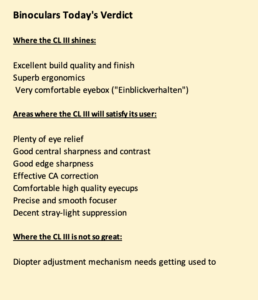
Overall finish and build quality appears high. The CL comes with eyecaps and strap, but no objective covers.
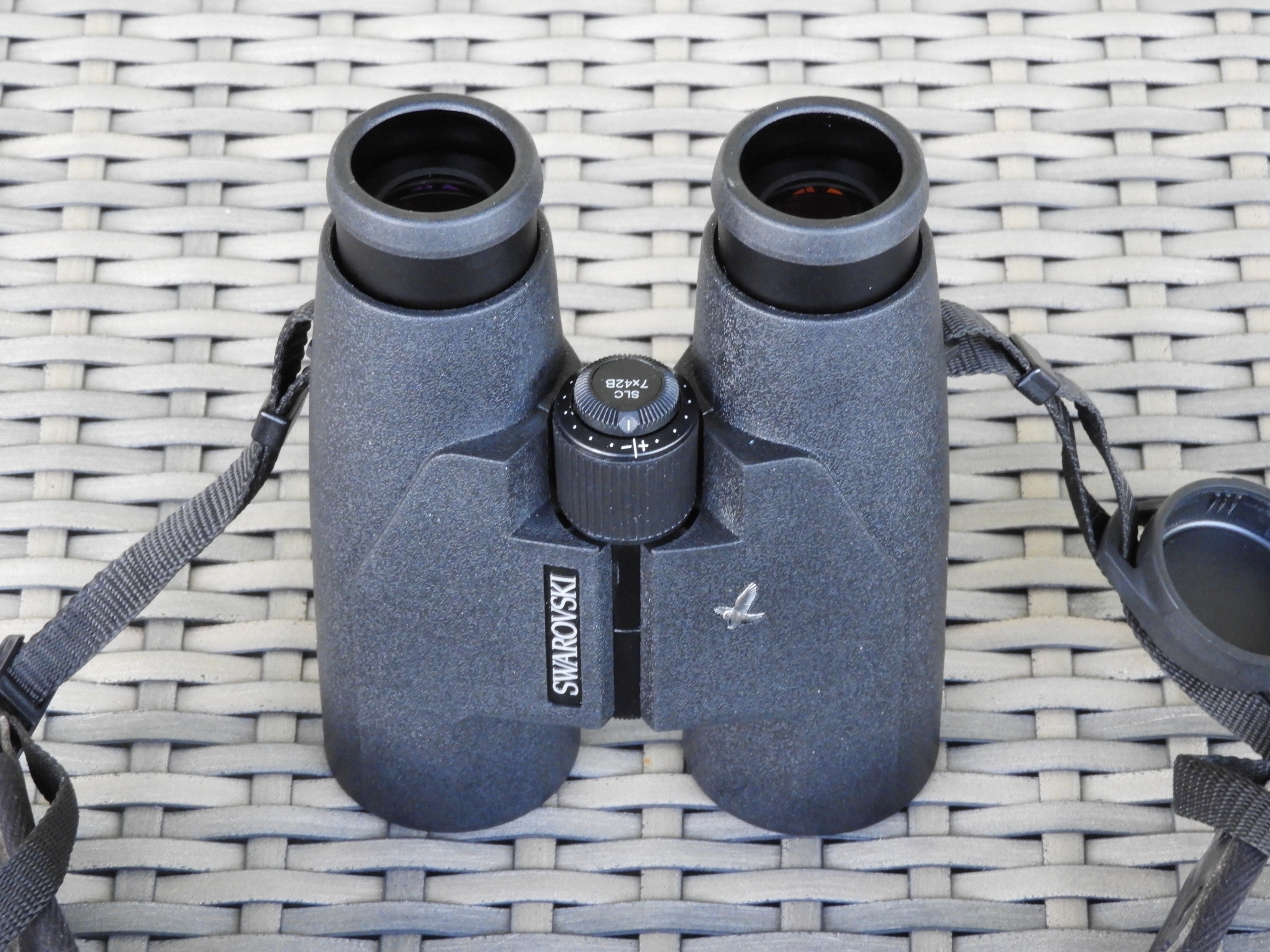
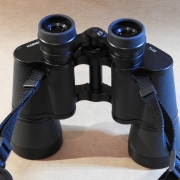
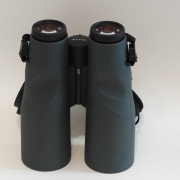
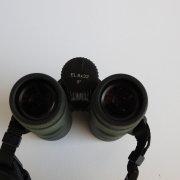
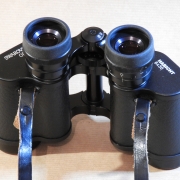
The rubber eyecups are huge (compare with previous CL version in pic). Their operation is a novelty for me – no clickstops, just a smooth screwing in and out action, sufficiently firm to keep position, giving a good impression of quality.
Smooth operation of the focuser as well; speed about in the middle between fast and slow. Other mechanics (hinge) firm and precise.
The diopter adjustment at first looks unchanged from the previous Cl version, which was not good; however, the dpt is now much easier to adjust than before thanks to better grip on the redesigned front plate. Now, things work easily.
No field pro !!! (sigh of relief) but Swaro now went to the other extreme and only provides a plain, relatively narrow, unpadded strap ending in two cord loops. It is very simple to attach the cord loops to the binocular, and that seems to be one of Swarovski’s main drivers behind the design of the new CL: simplicity, ease of operation, no hassle. The strap reminds me of the strap on the schoolbag of my grandchildren, and it’s not comfortable or sophisticated at all, but it’s length is simple and easy to adjust, easier than on traditional binocular straps.
Holding the new CL feels straightforward, the balance is good, I like the ergonomics much better than those of the previous version. Your index fingers will usually rest on the metal part of the body, so in winter, this may feel cold unless you use gloves.
Weight: with accessories, the CL is 626 g, against the 550 g of Swaro’s specs (they must have been weighing not only without accessories, but also with eyecups screwed off)
Putting the CL before my eyes, the eyebox is almost perfect for me, the eyecups feel soft but firm, and I like the ease of view better than in my previous CL. Whereas with the latter, I had always to adjust position of the eyecups against my eyebrows, the new wide eyecups are much easier.
Eye relief: a good 2 mm more than on the previous version, giving effective ER of 16 mm (8×30) and 15 mm (10×30), so this should work fine with glasses.
The 8 m (8×30) and 7m (10×30) more FOV than before are a welcome improvement. It’s nothing like in Holger Merlitz’ preferred widefield binos, but it’s now quite okay.
CA correction: fine on axis, where you may trigger a bit of color fringing only in hard high-contrast conditions, a bit more becomes visible as you move from the center of the image towards the edges. Is it better than in the previous version? Perhaps a little bit.
In other categories, such as field curvature or distortion, things are not greatly different from the previous version (there is a tiny bit more curvature in the new CL). Also, the image is a tiny bit warmer in the new CL; depending on your preferences, you may prefer the old or the new CL.
Image sharpness , both on-axis and off-axis, appear comparable.
This could become another success for Swarovski, unless the market finds the price too high.
A few further remarks about the new CL (called III) compared to the previous version (called II), after use in the fields and some moderate “testing”.
A preliminary note: someone wondered whether the new CL is Swarovski’s answer to Zeiss’ SFL 8×30, and I believe it is, so I briefly compared the two as well.
Sharpness: the III provides a good central and a – surprisingly – good edge sharpness. Both central and off-axis sharpness are comparable to the II, but the III has a wider FOV, so it wins here. Central sharpness is comparable to the SFL, but the latter’s edge sharpness is clearly worse in my eyes.
I briefly confirmed visual impression of central sharpness on the USAF 1951 with a 2.5X Kite Optics booster.
My sample of the III exhibits almost zero spikes, even less than the II and the SFL, but some fine ghosting on bright light sources and the odd slight reflection from lamps outside the FOV, not much different from the II and just a tiny bit more prominent than in the SFL.
Otherwise, I confirm what I wrote in my first note (CA not really an issue; image in the III slightly warmer than in the II; etc.), with the exception of field curvature: it’s not really different from the II.
A nuisance: the eyecaps are annoyingly tight (I know that some people like that; I don’t), as is often the case with Swarovski. I will exchange them against a third party product.
When out in the fields, what I really like about the III is how quickly I have established my observation position. Thanks to the design with the huge eyecups, I just raise the bino to my eyes and am done, hardly do I need to adjust position. Probably a personal thing which has to do with the way I hold and use the binocular, but I found the III much simpler and “faster” in this respect than the II with its narrower eyecups (not talking about the SFL, where I almost always have to fiddle a bit to find a final position).
So for me, the III is a pleasure to use.
A last word about color: at least the brown color version of the III is really nothing new for Swarovski, they used almost the same color before, e.g. on the EL SV.
And a very last word: the format 10×30 / 10×32 is not really my thing. I own very few binos of that size, because I prefer larger EPs than 3 mm, but checking the 10×30 version of the new CL briefly in the shop surprised me positively. I found it’s eyebox even more comfortable than in the 8×30. So for those who like the 10×30 format, the new CL might be worth considering.



Leave a Reply
Want to join the discussion?Feel free to contribute!